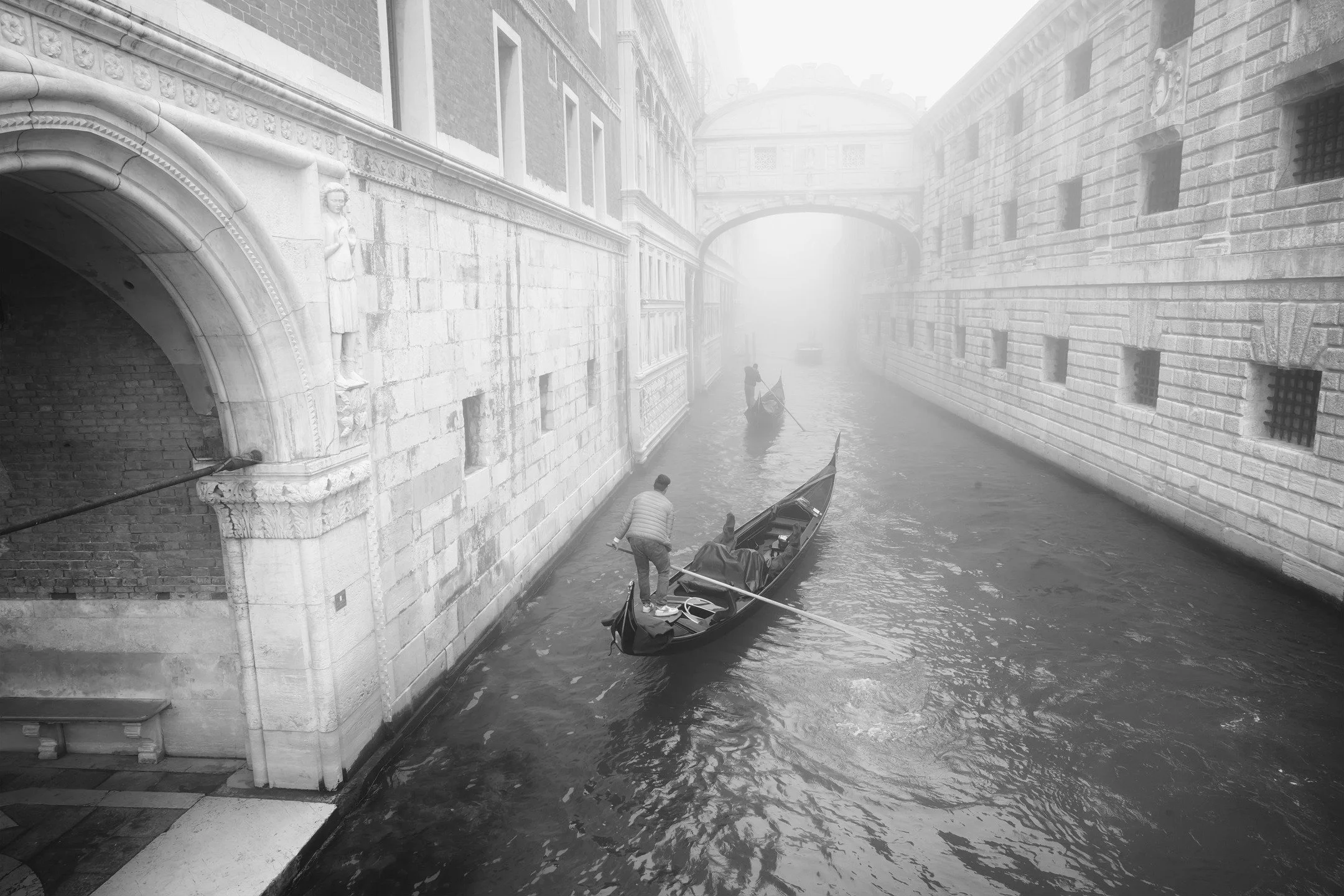
Acqua Alta (High Water) in Venice. A small collection.

There is a lot of talks these days about High Water in Venice after the dramatic events with exceptionally high tides and damages.

During my stay in Venice, I have witnessed several “Acqua Alta” none of them created (major) damages, few some disruptions mainly for residents, a couple for sure extra work and lot of worries for shop-owners, staff and residents living on ground floors.

“L'acqua alta era pittoresca, Ora è una maledizione” cit. Berengo Gardin

These are some of my favourites images I took.

Generally Venice only has high water in Autumn and Winter and even then it is not every day that the streets are flooded. However, when a higher than usual tide is expected in the city, sirens blare to warn the population so that they can prepare themselves. Maps, as posted at the boat stops, showing alternative pedestrian routes around the city that are equipped with special footbridges to avoid the high water and to reach the main parts of Venice.

Level of tide and % of Venice that is flooded less than 80 cm o0.

Normal tide at 100 cm 4%

at 110 cm 12%

An emergency sound alert the Venetian at 120 cm 35%

at 130 cm 70%

at 140 cm 90%

The causes of the tides are the following: - astronomic: the attraction of the sun and the moon cause the regular rise and fall of the water: "6 hours rise and 6 hours fall". You, therefore, have two maximums and two minimums a day. - meteorological: a strong south-east wind ("scirocco") may cause the tide to increase by as much as 1 meter. - geographical: the seiche is a sort of long wave that runs through the whole of the Adriatic Sea with a period of approximately 22 hours.

UPDATED 30th Oct. My Experience with Monese

I work as a freelance photographer. I'm fairly well-respected in my field and have won numerous awards for my work. All my social media are verified and I also have a Wikipedia page, so it's fair to say that is easy for an institution like a Bank to know who I am - what I do; also that this is a trustworthy account of my experiences.

I opened my personal bank account with Monese in 2016. At the time, I was more than satisfied with the overall experience. The bank offered good saving opportunities and excellent services. For three years, everything was positive. At one point, I was even toying with the idea of closing my main account with HSBC and doing all of my banking with Monese, but thankfully I never did.

Screen Shot 2019-10-28 at 18.36.56.jpg


Fast forward to 2018 when with some colleagues I set up a UK ltd company that provides photography workshops in a number of destinations throughout Europe. For this, of course, we needed a business bank account. It wasn't long before this that I had received an invitation to join Monese Business Banking.

Our business is successful, we're the number one ranked photography workshop provider on TripAdvisor in a number of cities. One of these cities is Venice, a highly competitive market where we have over 800 'excellent' ratings.

Our turnover was in excess of 100,000 Euro in less than one calendar year, and all this went through Monese. Also, all of our five full-time photographers hold personal accounts with Monese. Our credit card payments were processed by Stripe and Mango Pay, and in the five years we used them we never had one single chargeback. Our payments to Monese Bank Account consistently came from such reputable companies as Viator, Expedia, and GetYourGuide.

It was in May 2019, that things started going sour. I received an email from Monese asking me to confirm that I was using the account solely for business. I explained to them that, due to my line of work as a freelance photographer, I would often receive royalties from a number of sources when my images were used in publications etc. They let me know that this was fine as long as I was working as a freelancer.

Compliance Team (Monese)

19 Aug, 12:09 BST

Hello!

…… In cases, where you are operating as self-employed/freelancer you do not need a business account, that is correct. But all the transactions linked with your company should be done from your business account.

Best regards,

I thought that this was the end of the issues, but it turned out they had only just began.

On October 16th, 2019, I received an email from Monese informing me that my Euro and GBP had been closed with immediate effect. The first reason I was given was that they were enable to gather enough information on the Business and me. WOW after 3 years!!!

Then this changed into …. I was using my personal account for business transfers, which of course wasn't true.

To make things even worse the Monese staff didn't realise that I held a business account with them, and this was only closed ONLY after I told them of its existence. In around two minutes after receiving that email, all of my accounts were blocked. This caused havoc for my business, with both incoming and outgoing payments were being bounced.

I remain adamant that I never used my personal account for business. It would be highly illogical as our business is a limited company that we opened a business account especially for. Even if, on the off chance, I had made such a huge mistake, I would expect better service from a bank that I was a loyal customer of for many years. I had zero opportunity to discuss this issue or rectify it.

Anyway I accepted it and I gave them the Bank Accounts where to transfer the balances held on Monese=

Compliance team (Monese)

16 Oct, 11:23 BST

Hello Marco, We are very sorry for the inconvenience,

Unfortunately we have closed your account due to business transactions. As mentioned in our terms and conditions under section 3.6, a Monese personal account is for personal use only, not for business use.

We will transfer your bank details to our payments team and they will process the payment for you.

Thank you for understanding.

Their decision has distressed all of our employees, and we've requested that funds be transferred to alternative accounts. Over two weeks have passed and we have still not received OUR money from Monese!

After about ONE week I still had not received the money and I enquired with Monese Customer support …only to be told that if I wanted my money I had to supply the Banks details (!!!!)

Jessy (Monese)

23 Oct, 10:45 BST

Hello

Thank you for contacting Monese.

Please refer to the email you received from our compliance team on the 16th of October.

We are yet to receive your response.

So on the 24th October, I did send, once again, the details and I got a confirmation that mye mail had been received

Jessy (Monese)

24 Oct, 08:10 BST

Hello Marco,

Thank you for your response.

We got all your mails and your account details has been passed to our payments department, you will get a confirmation when it has been made.

Have a great day

As at today, 29th october still no money….. It is in my view unacceptable that a private or a company should be possibly kept without the money for such a long time.

30th October I got a call from a super kind and helpful Support Manager from Monese. He was very apologetic and told me that somewhere along the lines there was a mistake and things took few wrong turns and…. ended up in misery. He understood my strees erc My accounts have since been reopened, new cards will be posted free of charge !

I WAS VERY UPSET AND STRESSED IN THE LAST FEW DAYS BUT HEY ERRORS CAN HAPPEN!! Even more with Fintech ….and super technology. It is always nice when a company of the size of Monese recognise that something went wrong…. but also that this error will help them to understand what and where it happened to avoid the same in the future!

Bad Radkersburg and South East Styria

Located at less than one hour drive from our location in Orseg …..is Bad Radkersburg

When something has preserved its charm and its youthful appearance over 700 years, there must be something special.

Screen Shot 2019-10-05 at 11.55.49.jpg


There is no written record of Radkersburg’s founding. It is first mentioned in the records as “Rakerspurch” in 1182. Before the town even received the name Radkersburg, it was among the leading trade routes in Styria. It was considered a "market" in the year 1265. Trades have a long tradition here. Blacksmiths, in particular, have been held in high regard for centuries. Radkersburg was home to coopers as well. The cooper’s guild was found in the Bindergasse.

The old structures are being carefully maintained to this day. In 1978 the town was awarded the European gold medal for the protection and preservation of historical monuments.

Due to its proximity to the countries of Slovenia, Hungary and Croatia, the Bad Radkersburg region is in the centre of a quadripoint: an ideal base for a day trip to the wine-growing regions of the neighbouring countries or the Slovenian capital of Marburg.


On the Hauptplatz in Bad Radkersburg, you will find the town’s emblem, the Rathausturm. The upper section was destroyed by fire and rebuilt in 1806. You will also find the Mariensäule as a reminder of the plague on the Hauptplatz. The appeal of the enchanting town Bad Radkersburg at the border, in the most southern part of the thermal country Styria, lies in the unique mixture of splendid historical buildings, facades and monuments out of a historical past, and a young and refreshing town-life with nice cafeterias and shops. Do not miss a visit in the museum in the old arsenal, which is folkloristic and historical on one hand and a current “visiting card “ of the town and its surrounding on the other hand.

The thermal bath Bad Radkersburg, which is close by, is known to be the thermal facility of the thermal country Styria that is friendly and open to families. It is a real wellness oasis in the middle of health, cure and holiday hotels.

All in all, Bad Radkersburg definitely belongs to the highlights when visiting Styria.

Screen Shot 2019-10-05 at 11.55.34.jpg
Booking.com

Jeruzalem vineyards (Slovenia) and Varazdin (Croatia)

From our location in Orseg in Hungary is very easy to organise a one day photography tour in Slovenia and Croatia, visiting two interesting areas,

JERUZALEM (Slovenia)

_DSF1408 copy.jpg

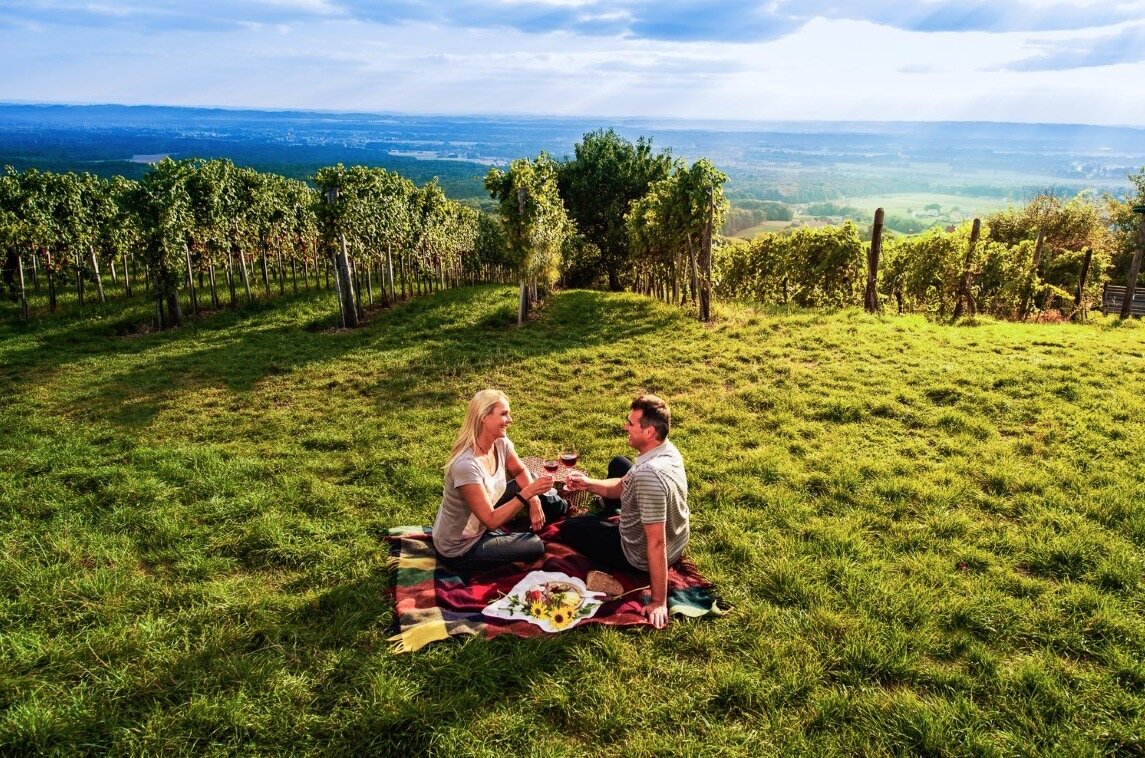
Legend has it, that crusaders on their way to the holy land, stopped on one of these beautiful hills to rest. Here they were met by hospitable locals, that offered them good wine, and that is when they decided never to leave this place. They claimed the region as their own and named it Jeruzalem. And to this day it remains one of the most striking places with one of the most spectacular views over the surrounding vineyards.

_DSF1412 copy.jpg

Today, Jeruzalem is an idyllic village, which is built around the church Of our Lady of Sorrows (1652). The church was named after the painting of the Mother of Sorrows, for which it was claimed, that it has been brought here by the crusaders, directly from the Holy land (Jerusalem, Palestine) in the 13th century. Next to the church you can find the Jeruzalem mansion, which has been converted into a boutique hotel with a rich botanical garden.Varaždin is the city of baroque, young people, music, flowers and bicycles. „Little Vienna“ with rich natural legacy interwoven in parks, a must see destination, located in the North of Croatia on the southern bank of the River Drava.

_DSF1411 copy.jpg

They take their wines very seriously here and a lot of families live off a combination of wine production and tourism. Therefore it is no surprise that the area is famous for its high quality wines with long traditions. Thanks to the great diversity and varieties of white wines produced in this area, you can truly say that Jeruzalem-Ljutomer-Ormož is a true symphony of whites! Wine lovers, and especially white wines lovers, will discover a true Slovenian paradise here among incredible nature.

VARAZDIN (Croatia)

With 46.946 inhabitants and the average annual temperature of 10°C, the city of Varaždin is one of the most attractive destinations to live in or to visit in Croatia. It is the tourist, cultural, economical, educational and sporting centre of North-western Croatia.

IMG_20191004_144250.jpg


The nine-times winner of the award presented by the National Tourism Board, the nomination for the Golden Flower of Europe and holder of 11 „Green Flowers“; the national award, all for the most ordered, appointed and maintained destination, speak in favour of Varaždin being the city of pleasant emotions.

The city of angels, colourful and magical events; the most famous ones Špancirfest - the Street Festival of good emotions in summer and the classical music festival -Varaždin Baroque Evenings which celebrates music, baroque architectural inheritance and authentic instruments, in autumn.

Not to mention a lovely lunch in Vidovec based on Sarma and some great slovenian or Croatian wine!
The Municipality of Vidovec is known for production of Varaždin cabbage which takes primary place in the production of agricultural products, while other cultures include potatoes, pumpkin, celery and kale. Cabbage is planted on a surface of 251.692 ha and its production has a longstanding tradition.

Authentic-Serbian-Sarma-Recipe-800x534.jpg


Tour of Graz - Austria

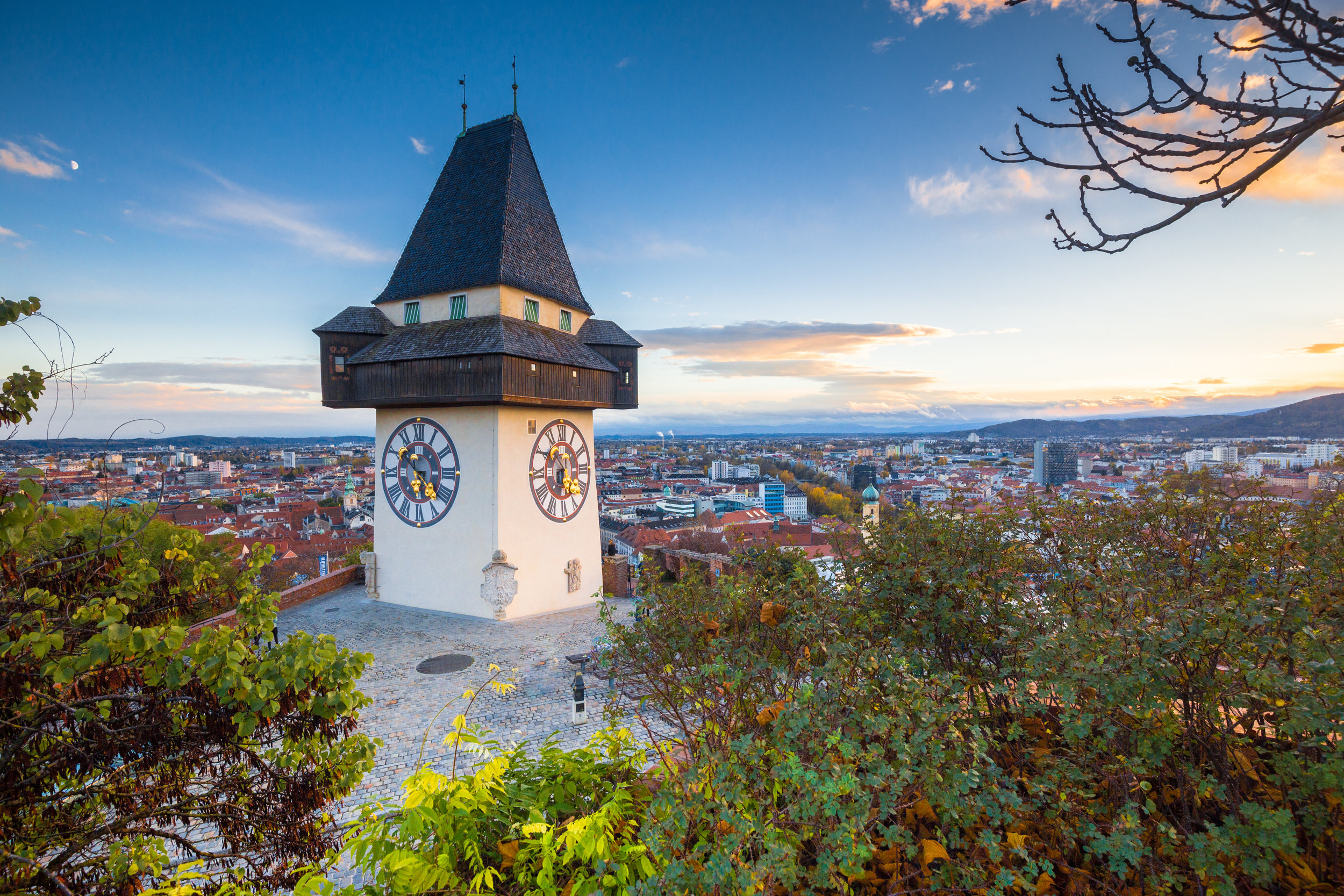
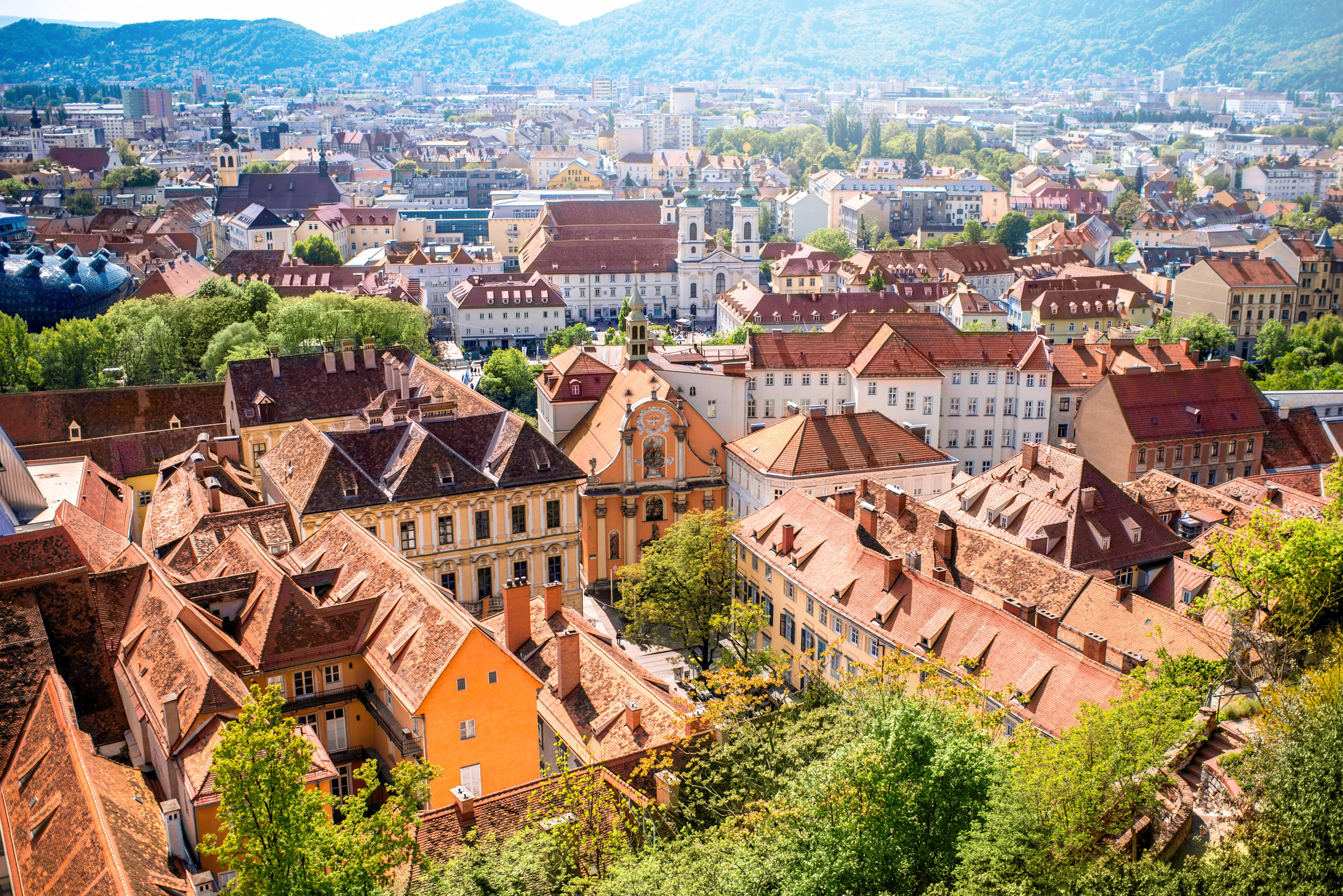
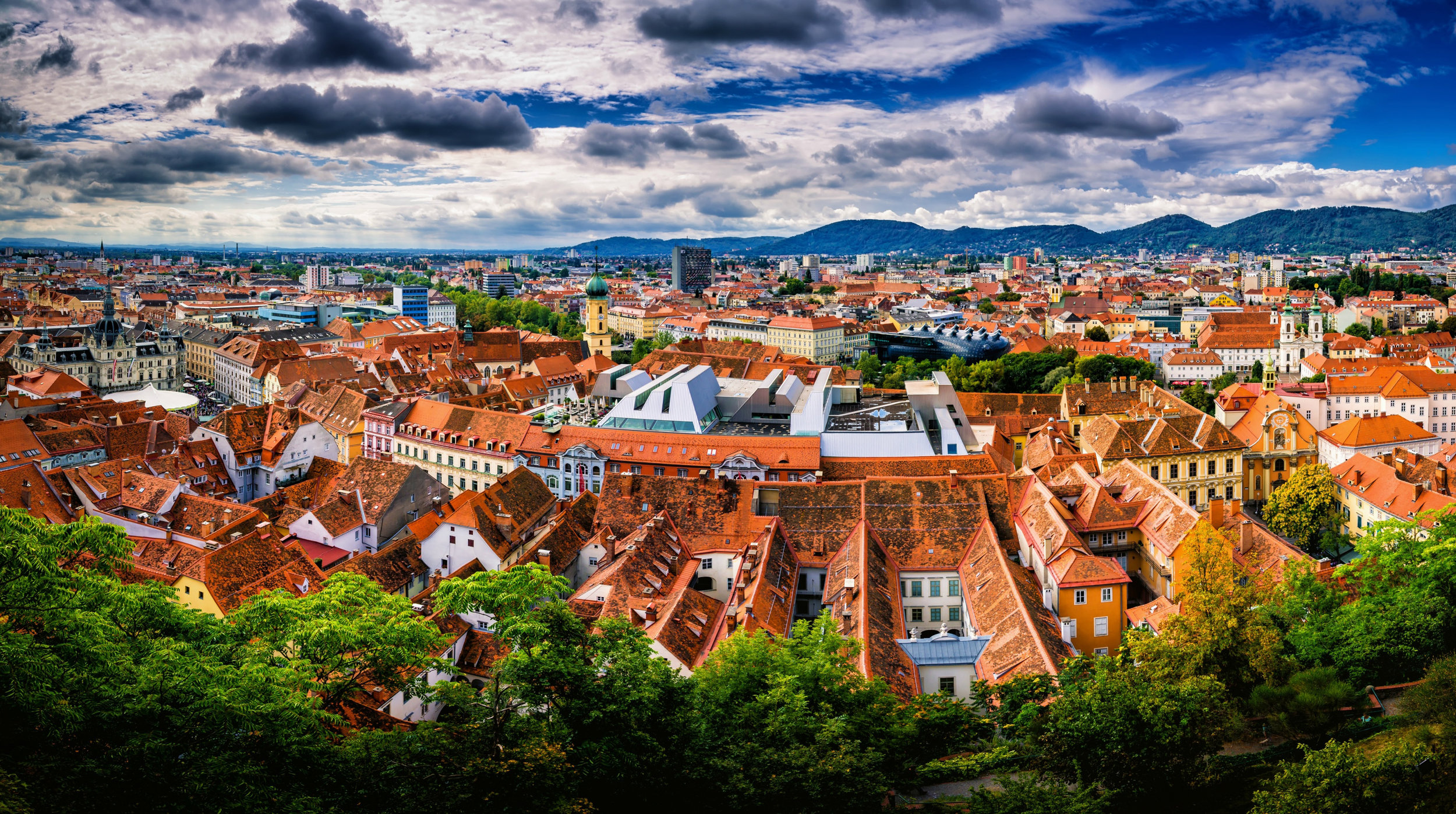
The Styrian capital Graz, with roots dating back to the Roman Age, lies on either side of River Mur. Graz is well known for its striking buildings and architecture.


Graz, the capital of Styria and Austria's second largest city, is nestled in the south of the country and is a vibrant city with a population of 250,000. Here, culture, culinary delights and trendy design take centre stage on both sides of the River Mur. Its reputation of being a lively, modern cultural place earned it the title of Cultural Capital of Europe 2003, and with a population of 250,000, it has a great number of interesting sights ranging from old and time-honored to dynamic and modern. Its beautiful historical centre (a UNESCO World Cultural Heritage site) is a colourful smorgasbord of different influences, from the Baroque to the Renaissance, Art Deco and Medieval.


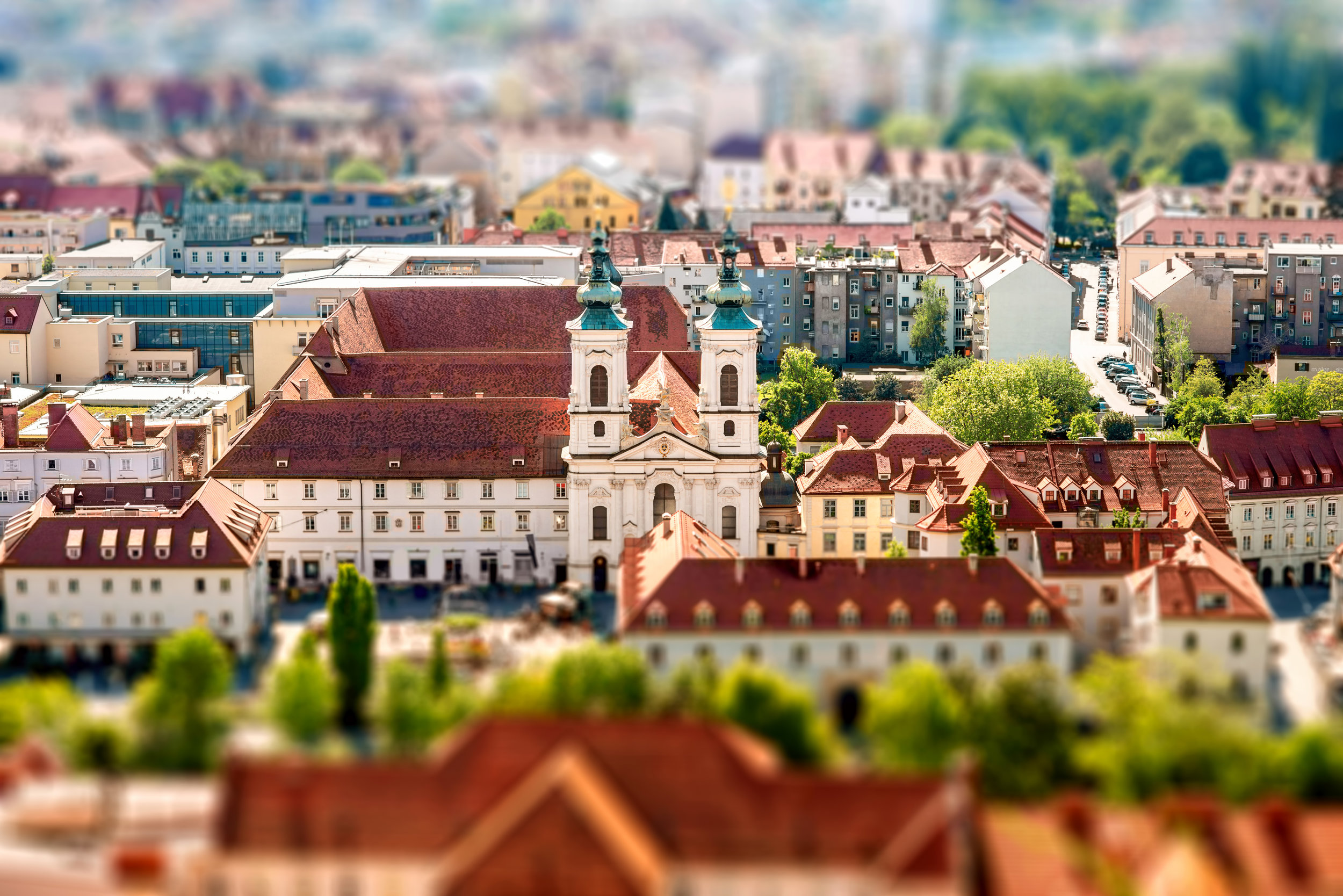
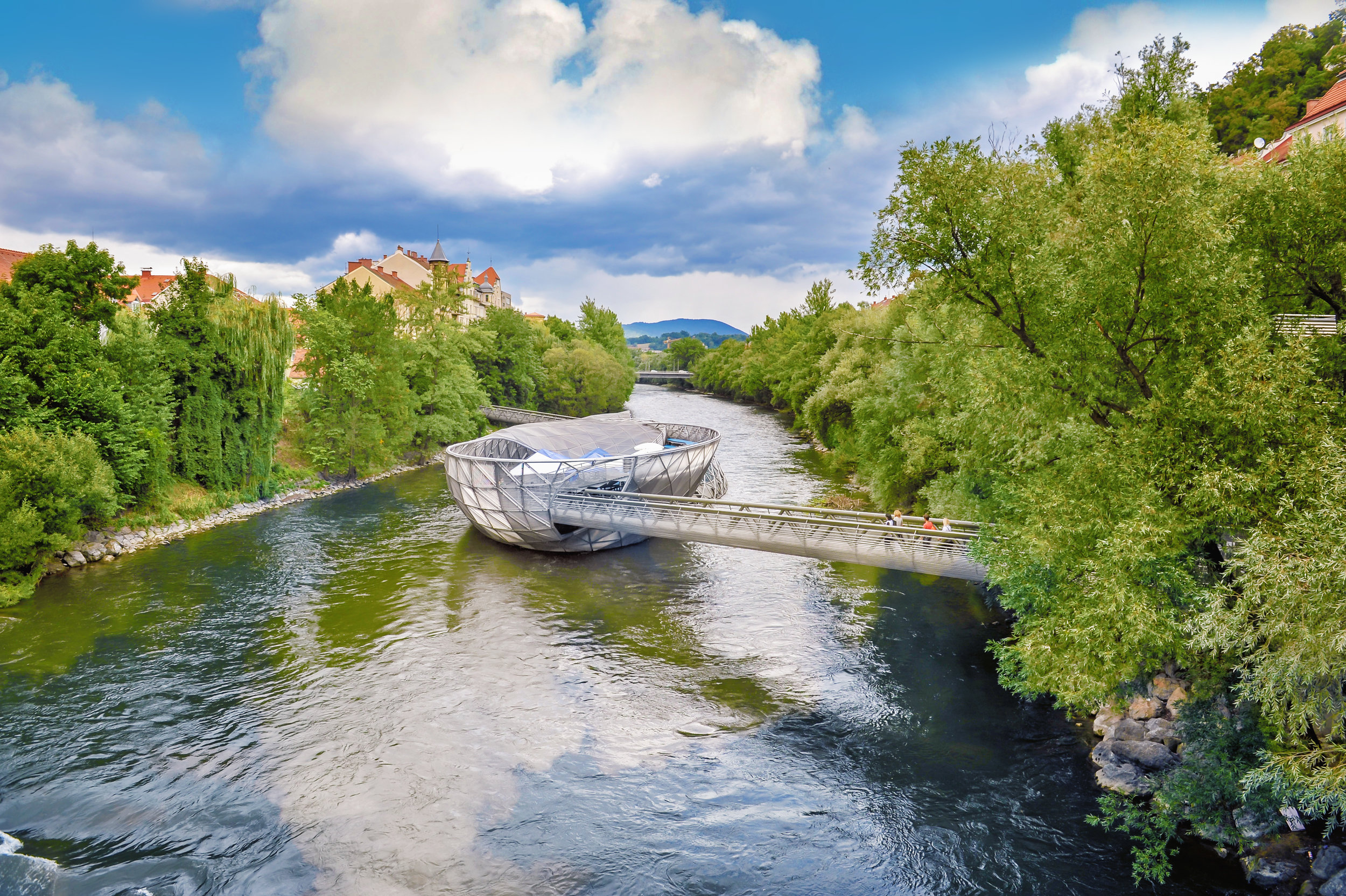
Landmarks such as the late-gothic cathedral is reminiscent of the times when Graz was still an imperial seat, and the baroque Mausoleum of Emperor Kaiser Ferdinand II next door is an equally impressive sight. Universalmuseum Joanneum, donated by prince Johann at the beginning of the 19th century, is Austria's largest provincial museum and spotlights nature, culture and arts in Styria, whereas the Murinsel is an artificial floating platform in the middle of the Mur. It was constructed by the New York artist and designer Vito Acconci on the occasion of Graz becoming the 2003 European Capital of Culture.

Drone Photography


Drone photography by international Award Winner photographer Marco Secchi available for assignments in Slovenia, Hungary and the Balkans.

The Gallery Frame is Powered thanks to SmartFrame

Ohhhh YES I do love Sunflowers!

5 facts and one photograph

DSCF1600 copy-1563796240760.jpg

1. Each sunflower is actually thousands of teeny flowers.

The iconic yellow petals and fuzzy brown centers are actually individual flowers themselves. As many as 2,000 can make up the classic sunflower bloom.

2. You should harvest sunflowers in the morning, not the afternoon.

Planning to clip a few to display in a vase? If you wait until the afternoon, they may wilt.

3. Sunflowers are native to the Americas and were domesticated around 1000 B.C.

Even way back when, people saw the value in growing sunflowers, which are still harvested for sunflower seeds (and the oil you can make from them) today. In 2014, 1.7 million acres were planted in the United States, the USDA reports. The majority of those were found in North Dakota.

image

4. A dried sunflower makes a unique, natural bird feeder.

Feathered friends love to snack on sunflower seeds just like you do. To find out how to hang this garden-inspired feeder (no peanut butter required!), get the tutorial at Creative Cain Cabin.

Advertisement - Continue Reading Below

5. Each sunflower can contain as many as 1,000 to 2,000 seeds.

So there are tons for birdies to munch on! But you can harvest and roast them for yourself, too.

#sunflower #flowers #flower #sunflowers #nature #art #photography #yellow #summer #love #sun #hungary #ig #happy #sunset #instagram #artist #orsegcc#travel#holiday #beauty #photooftheday #bee #photo #sunflowertattoo #instagood

Gostilna Mlin in Kamna Gorica , Slovenia

Gostilna Mlin in Kamna Gorica is an old converted mill and is set in a great location in an idyllic village close to Radovljica and Bled.

Staff is fast, helpful, attentive and kind

The menu offers Slovenian dishes, traditional and Pizzas.

Food is excellent with a good variety and a great value for money .

DSCF1565 copy-1563624849606.jpg

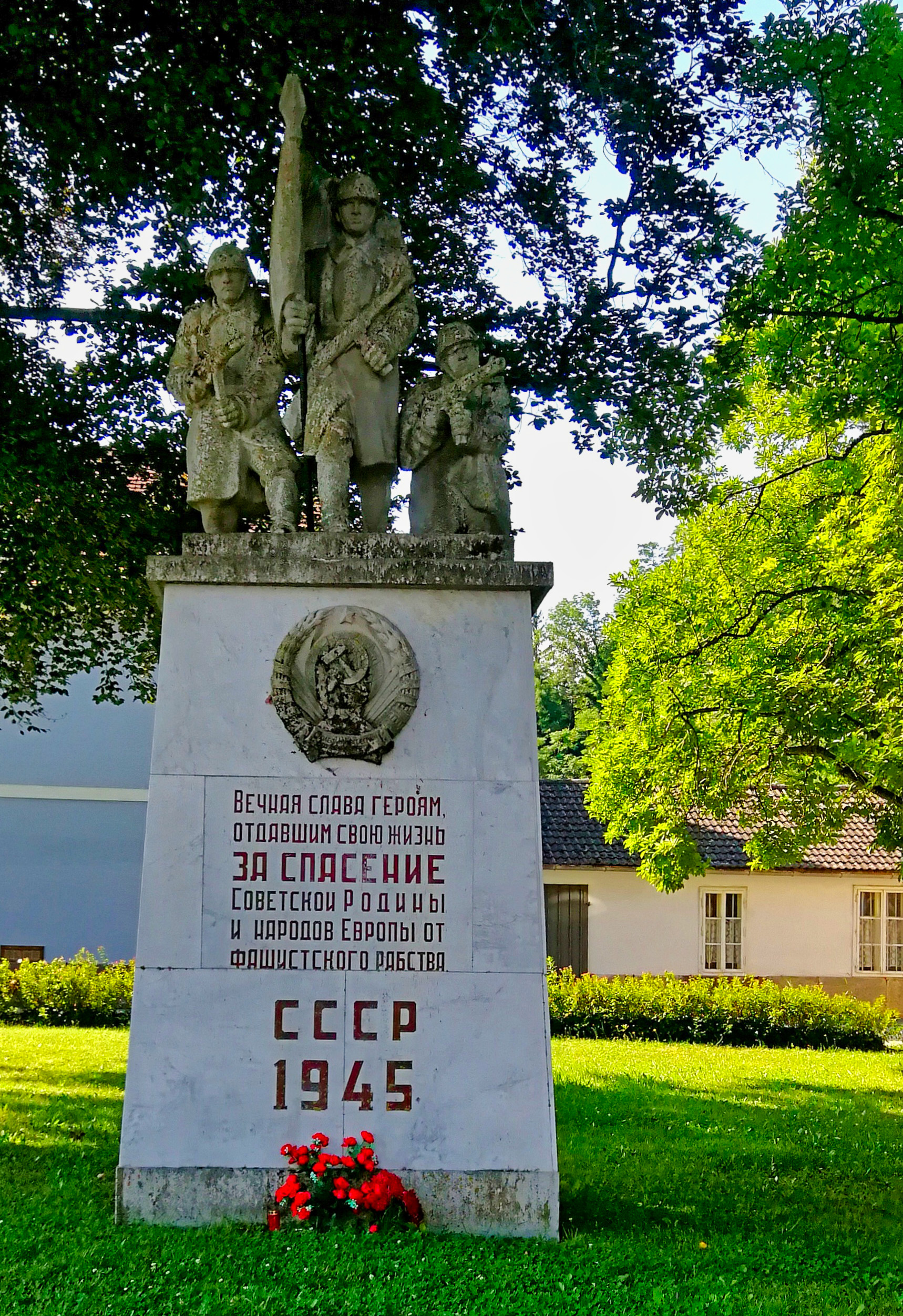
Soviet Victory Memorial Bad Radkersburg

This memorial commemorates the victory of the Red Army in 1945 against the nazi fascist

IMG_20190710_121108.jpg

Located near the border with the Kingdom of Hungary, it was affected by the armed conflict between King Matthias Corvinus and Emperor Frederick III in the late 15th century. During the Ottoman–Habsburg wars, extended fortifications were laid out according to plans designed by the Italian architect Domenico dell'Allio. Radkersburg was elevated to an Imperial fortress by resolution of the 1582 Diet of Augsburg.

In the course of the 19th century language conflict, nationalist struggles in the ethnically mixed area arose between the predominantly German-speaking citizens and the Slovene-speaking peasant population down the Mur River. A garrison town of the Austro-Hungarian Army in World War I, it was occupied by troops of the newly emerged Kingdom of Serbs, Croats and Slovenes (Yugoslavia) on 1 December 1918. An armed revolt against the occupation forces, led by Johann Mickl, in order to affiliate the town with German-Austria failed. Nevertheless, by resolution of the 1919 Treaty of Saint-Germain, the area north of the Mur passed to the First Austrian Republic, while Oberradkersburg (Gornja Radgona) and the neighbouring municipality of Apače (Abstall), on the south bank, became part of Yugoslavia.

The nationalist conflicts lingered on, on both sides of the border. In World War II many members of the German minority greeted the Wehrmacht invasion of Yugoslavia in 1941 and joined the German combat units, while large parts of Radkersburg were devastated by armed conflicts. After the war, most of the remaining German-speaking population south of the Mur was forcibly expelled.

The Radkersburg bridge across the Mur was reopened on October 12, 1969 which led to a first rapprochement between Austria and Yugoslavia. In 1975 the town achieved spa status, another thermal spring was made accessible in 1978, soon followed by an extension to the bathing site. Since Slovenia joined the Schengen Area in 2007, border controls between Radkersburg and Gornja Radgona have been abolished.

35mm equivalence of native Fujifilm X lenses


I am often asked about the correspondence focal length for the Fujifilm X lenses

This table will help you find the true 35mm equivalence of native Fujifilm X lenses.


Native Fujifilm X lenses

Name Focal Length (35mm) f-stop (35mm) Aperture Size

XF14mmF2.8 R 21mm ƒ/4.2 5mm

XF16mmF1.4 R WR 24mm ƒ/2.1 11mm

XF16mmF2.8 R WR 24mm ƒ/4.2 5.7mm

XF18mmF2 R 27mm ƒ/3 9mm

XF23mmF2 R WR 35mm ƒ/3 12mm

XF23mmF1.4 R 35mm ƒ/2.1 16mm

XF27mmF2.8 41mm ƒ/4.2 9.6mm

XF33mmF1 50mm ƒ/1.5 33mm

XF35mmF1.4 R 53mm ƒ/2.1 25mm

XF35mmF2 R WR 53mm ƒ/3 18mm

XF50mmF2 R WR 75mm ƒ/3 25mm

XF56mmF1.2 R 84mm ƒ/1.8 47mm

XF56mmF1.2 R APD 84mm ƒ/1.8 47mm

XF60mmF2.4 R Macro 90mm ƒ/3.6 25mm

XF80mmF2.8 R LM OIS WR Macro 120mm ƒ/4.2 29mm

XF90mmF2 R LM WR 140mm ƒ/3 45mm

XF200mmF2 R LM OIS WR 300mm ƒ/3 100mm

XF8-16mmF2.8 R LM WR 12-24mm ƒ/4.2 2.9-5.7mm

XF10-24mmF4 R OIS 15-36mm ƒ/6 2.5-6mm

XF16-55mmF2.8 R LM WR 24-83mm ƒ/4.2 5.7-20mm

XF16-80mmF4 R OIS WR 24-120mm ƒ/6 4-20mm

XF18-135mmF3.5-5.6 R LM OIS WR 27-200mm ƒ/5.3-8.4 5.1-24mm

XF18-55mmF2.8-4 R LM OIS 27-83mm ƒ/4.2-6 6.4-14mm

XF50-140mmF2.8 R LM OIS WR 75-210mm ƒ/4.2 18-50mm

XF55-200mmF3.5-4.8 R LM OIS 83-300mm ƒ/5.3-7.2 16-42mm

XF100-400mmF4.5-5.6 R LM OIS WR 150-600mm ƒ/6.8-8.4 22-71mm

Touit 2.8/12 18mm ƒ/4.2 4.3mm

Touit 1.8/32 48mm ƒ/4.2 11mm

Touit 2.8/50M 75mm ƒ/4.2 18mm

Odprta kuhna in Ljubljana

Odprta kuhna is a unique and the most popular food market in Slovenia that has been bringing freshness and innovation to the Slovenian culinary scene since 2013.

It has become a regular Ljubljana event and every sunny Friday from early spring to late fall its stands attract thousands of foodies and fans of relaxed hanging-out.

Every (sunny) Friday between 10 AM and 9 PM, and until 10 PM in the summer, Pogačarjev trg square comes to life in various colours, flavours and aromas. The stands of Odprta kuhna have presented over a 100 restaurants from all over Slovenia and the visitors have tried close to a thousand different Slovenian and international dishes.

Imagine a walk in the Ljubljana streets that takes you around the world. When you walk between the stands of the colourful food market, you smell homemade Kaiserschmarrn from one side and on the other some flames jump up into the air from a Asian wok; bograč from Prekmurje is inviting you to one stand and juicy burgers are on the grill at the next. It simply doesn’t get tastier than that!

Cold?? It's the Frost Saints

Surprised about the spell of cold and rainy weather?? No need!

The Ice Saints take place from May 11th till May 13th or 12th to 14th depends on the country. The Ice Saints is a name given to St. Mamertus, St. Pancras and St. Servatius in the folklore of some Europe countries. They are so named because their feast days fall on the days of May 11, May 12, and May 13 respectively.

The period from May 11 to May 15 was noted to bring a brief spell of colder weather in many years.

My grandmother grew up in Austria with that being the rule and has instilled it on at least two more generations. In Hungary the saints are the Ice Saints are St. PancrasSt. Servatus and St. Boniface of Tarsus was said to have feasts that fell during the last possible cold snap of the year before autumn. Exactly which saints are included in the group depends on where you live. So if you waited to plant until after their feast days, you were generally considered safe, in fact, Saint Sophia with her feast day on 15 May, became one of the "Ice Saints". She is known as kalte Sophie "cold Sophia" in Germany, and in Slovenia as poscana Zofka "pissing Sophia" or mokra Zofija "wet Sophia" and traditionally she wash away the cold spell!

According to The Big Book of Catholic Customs and Traditions, this tradition stems from the idea that these saints played a trick on the people by bringing a frost. In the fifth century, Archbishop Mamertus began a tradition rogation days, prayer and processions around the crops, orchards and animals, asking God to protect them from the saint’s wrath.

A 2013 article from The Guardian says that as late as the seventeenth century, Galileo and his students were studying the Ice Saints and weather patterns around their feasts. They found the legends of the cold naps to be accurate. However, it also states that more recent studies aren’t so certain.

Must stop moaning

Casa del Tintoretto

Image by

ophelyee

via Flickr

I have complained before about the so called Artist Block at least here and just few days ago . Today I realized that I must stop moaning, at least for the time being, and here are few of the  reasons:

  • I am lucky enough, in this period of my life, to leave in one of the most beautiful and inspiring places of the world: Venice.

  • I live very close to the sea, probably 20 meters and I believe the sea is very inspiring

  • I live about 100mt from where Tintoretto used to live and work, there are so many of his works close to me that is unbelievable.

  • Venice is so rich of libraries, galleries,  museums that is so easy to get inspiration.

  • Life here is relaxed and at a different pace, so you do not get stressed and have all the time you need to get inspired.

  • In Venice lived just to mention some Italian Artists  Canova, Canaletto, Vasari, Giorgione, Mantegna, Titian....

No more excuses then!

Related articles

Slapnik in Slovenia

Slapnik, a settlement with 17 houses that once had around 80 residents, mostly farmers, lost its population to larger towns in the region, as well as to immigration to the US and Australia after WW2. Since 1985 is has been designated as part of Slovenia’s immovable cultural heritage, and become a curiosity for visitors, and those interested in the region’s architecture in particular.

The British Broadcasting Company will film a show in the village in which couples from around Europe will live in the renovated houses. Further details remain unknown, but it’s expected that around 20 episodes of the series will be filmed.</p><p>Slapnik, and the region in general is expected to benefit from the attention, while the renovated buildings will provide more opportunities for further commercial activity in the village.

DSCF1270 copy.jpg


More images

https://www.marcosecchi.com/gallery/Slapnik/G0000gZxXl5J8prI/C000040quAlDfuPY


The lovely village of Stanjel

Štanjel  or in Italian San Daniele del Carso is a village in the Municipality of Nomen in the Littoral region of Slovenia.  It is located on the Karst Plateau overlooking the Vipava Valley.

In the 17th century it was fortified to defend it against Ottoman raids. It was heavily damaged during World War II and it has been slowly rebuilt since.

DJI_0170-1554308529974.jpg

The castle represents the dominant part of the old settlement. Originally a much smaller medieval building owned by the Counts of Gorica, it was inherited by the Habsburgs, who bequeathed it to the Counts of Cobenzel. With the exception of a brief Venetian rule and the ownership by the Coronini family from Kromberk, the Cobenzel family continued in Štanjel until 1810, when the family eventually died out. From that moment on, the castle was owned by various families.

According to dates inscribed on numerous commemorative plaques, we can assume that the Counts of Cobenzel began the renovation of the castle in 1583, and gave it its present Baroque-Renaissance appearance in 1661. Eight years later, the two-winged residence was completed with a walled enclosure and a monumental Renaissance gateway.

In World War I, the Austrian Army used the castle as a military hospital for its officers. In the interwar period the castle became the central point of public and social life thanks to Max Fabiani. Here was the municipality, school, library and medical centre. In the summer, dances would take place in the castle courtyard as well as concerts and plays. In World War II it was severely damaged during an attack by the National Liberation Army. Renovation began in the second half of the 20th century.

12th Annual International Color Awards

color-awards-12th_medal-nominee.png


LOS ANGELES 12th March 2019

Professional photographer Marco Secchi of Hungary was presented with the 12th Annual International Color Awards Nominee title in the category of Fine Art at a prestigious Nomination & Winners Photoshow streamed Saturday, March 9, 2019.

DSCF5035 copy-1546592999488.jpg

The live online gala was attended by 11,829 photography fans around the globe who logged on to watch the climax of the industry's most important event for color photography. 12th Annual Jury members included captains of the industry from Sotheby's, New York; Benetton, Ponzano Veneto; The Art Channel, London; Kolle Rebbe, Hamburg; Droga5, New York; Preus Museum, Norway; Art Beatus, Hong Kong; Forsman & Bodenfors, Gothenburg; Wieden & Kennedy, Portland; Fox Broadcasting Network, Los Angeles; Gallery Kong, Seoul; and Phillips, New York who honored Color Masters with 761 title awards and 1,032 nominees in 37 categories.

"Winning awards is an endorsement that you are doing something right in your craft. I am delighted to win Merit of Excellence in the Food category and have another 8 nominations... a huge thank you to you and your support of photography," said Hugh Johnson, 2nd Place Winner in Food. Leigh Miller, 1st Place Winner in Aerial added, "Wow, I'm over the moon with pride and joy at getting 1st place and honourable mention in the amateur Aerial category. I'm privileged to have my work showcased alongside such talented and creative people. Thank you International Color Awards for the chance to show our work on an international stage and big thanks to the judges for their time."

"It is an incredible achievement to be selected among the best from the 7,241 entries we received this year," said Basil O'Brien, the awards Creative Director. "(Name)'s "(Title of Photograph)," an exceptional image entered in the (Category) category, represents contemporary color photography at its finest, and we're pleased to present (her/him) with the title of Nominee."

INTERNATIONAL COLOR AWARDS is the leading international award honoring excellence in color photography. This celebrated event shines a spotlight on the best professional and amateur photographers worldwide and honors the finest images with the highest achievements in color photography. www.colorawards.com

  • Camera Fujifilm

  • Model XT2

  • Lens 16-55 f/ 2.8

Chromatic Awards

Very happy to share that one of my images has won second place, in the Professional Category of the Cityscape category, in the 2019 International Chromatic Awards

Many congratulations on all the other winners and nominees and my thanks to the judges for their hard work.

It was shot on

Camera Make FUJIFILM

Camera ModelX-T2

Focal Length 42.7mm

Apertureƒ/8.0

Shutter Speed1/350s

ISO400

Screenshot 2019-03-12 at 12.48.09.png

Venice Carnival 2019.....is here


The Carnival of Venice is an annual festival, held in Venice. The Carnival starts around two weeks before Ash Wednesday and ends on Shrove Tuesday (Fat Tuesday or Martedì Grasso), the day before Ash Wednesday.

The Venice Carnival is now world famous - it always takes place during the ten days leading up to Shrove Tuesday. Carnival, being a pre-Lent festival, means 'farewell to meat' and is celebrated throughout Italy.

Ballo del Doge 04.jpg


It was first held in Venice in the 11th century and consisted of over two months of revelry, until it fell into decline during the 18th century. It was revived in 1979 with great success and nowadays it is a great excuse to don a mask and costume, parade around the city, enjoy the live music in the main squares of the city, the events organised by the tourist board and is a wonderful open-air festival where everyone can join in. Fantastic costumes are displayed in St Mark's Square and Venice is the perfect back-drop for amazing photographs.


L1000644 copy.jpg

Carnival in the 18th century began with a series of balls in St Mark's Square, as can be seen on the fresco on the walls of the famous café Quadri's. Fortunes were squandered every night of Carnival in the Ridotto Gambling casino, whatever the social status all the people wore costumes and masks, many connected to the Commedie del'Arte, Harlequin, Columbine, the Plague Doctor and of course the courtesans.

The 2019 edition will run from Sat, Feb 16, 2019 – Tue, Mar 5, 2019

Photo Walk during Venice Carnival 2019

Carnival in Venice


This year the Venice Carnival will be from the 16th February to the 5th March 2019

The Venice Carnival is the most internationally known festival celebrated in Venice, Italy, as well as being one of the oldest.

This congregation of masked people, called Venice Carnival, began in the 15th century, but the tradition can be traced back to the beginning of the 14th Century! During those years one of the first laws made by the Serenissima was that masks cannot be used around the city at night.

Later, Venice Carnival attracted foreigners - including princes - from all over Europe, who came to enjoy the wild festivities while spending fortunes.

DSC_3323 copy.jpg


During the ten days of Carnival leading up to Mardi Gras, Venice is a hive of activity and entertainment, from improvised street entertainment to performances put on by the organizers. A central idea is chosen each year that is taken from various cultural or show-biz themes. Saint Mark’s Square remains the heart of Carnival, with its huge stage, although other events take place throughout the city, helping to avoid an excessive build-up of people in pedestrianized Venice.

During this period I will offer with my team a Carnival Workshop where during the first  2 hours we will take pictures of the Masks and Costumes in St Mark’s Square and then we will head after a coffee break for the Venice Tour. 4h Tour Price is €500 Max 3 people or 2 adults + 2 Teens  – Extra persons MAX 2  € 70 per person.


Book here and choose 4h  then specify Carnival in Notes