The Last Moretto from Miotto
Some objects enter a collection because you go looking for them. Others arrive carrying a story that began long before you thought of keeping the object.
This one arrived at the end of June this year thanks to my friend Paolo Brandolisio, one of the last remeri, the traditional makers of Venetian oars and forcole. But that is another story!
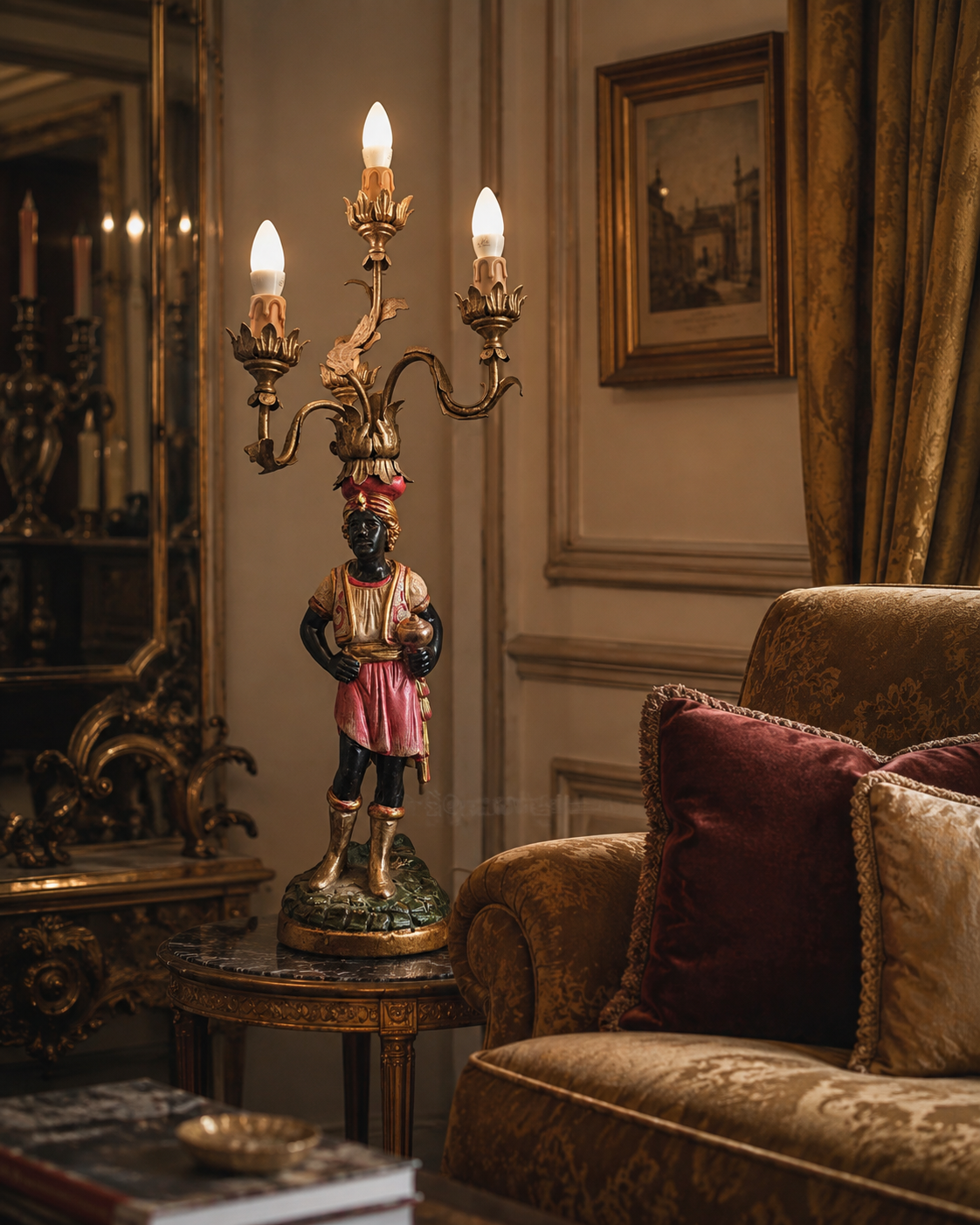
It is a Venetian moretto, a painted and gilded figure supporting a three-light candelabrum. It was made by the Miotto family in Venice, and it came to me directly from a member of that family.
That alone would have been enough to interest me. But my connection with Miotto goes back much further.
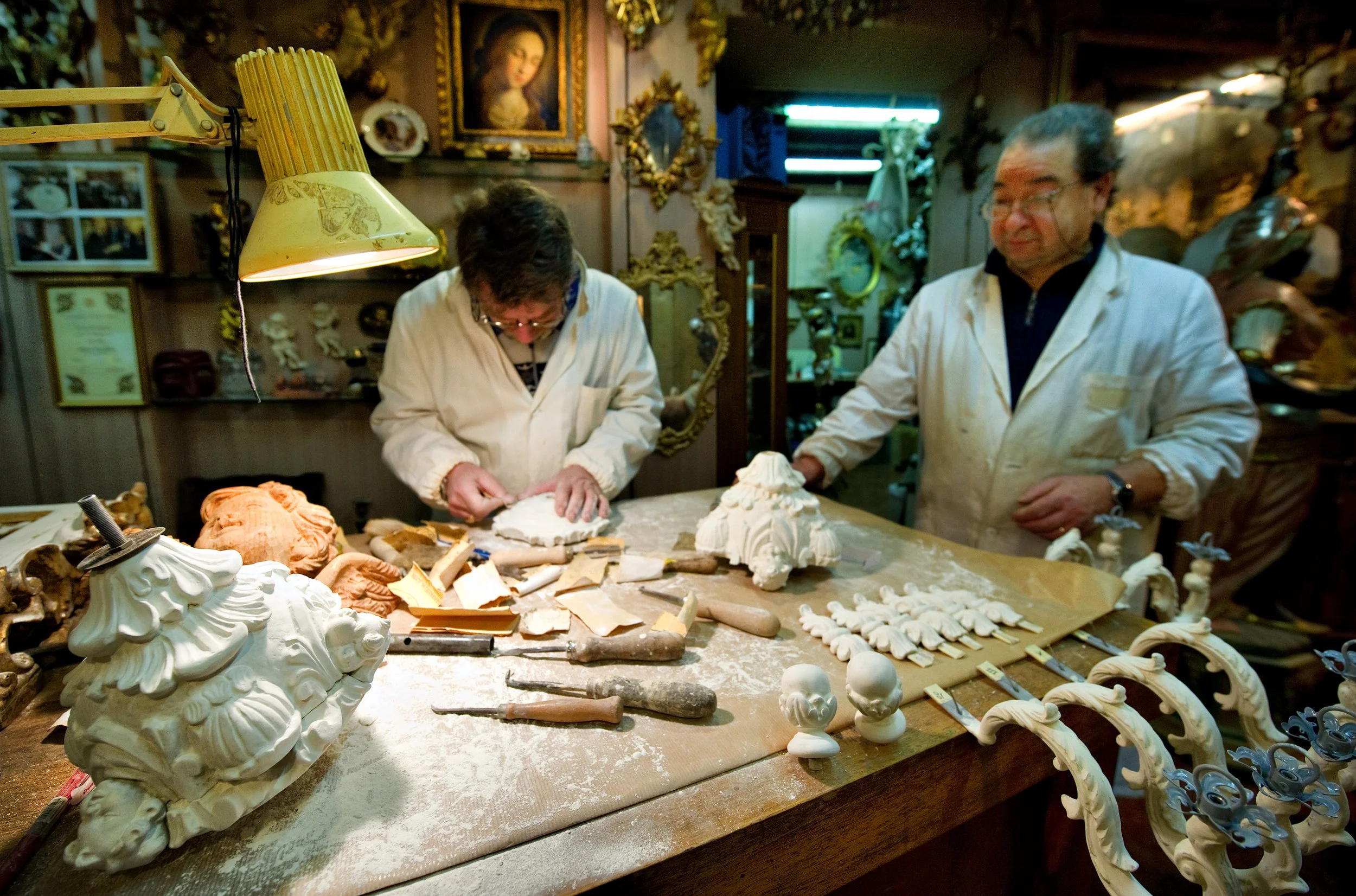
Years ago, I photographed their workshop in Castello, again thanks to Paolo, who introduced me to them. It was one of those extraordinary Venetian interiors where there seemed to be almost no empty space. Mirrors climbed the walls. Gilded consoles stood beside carved figures. Chandeliers hung overhead. Moretti appeared between furniture and frames, some finished, others seemingly waiting for another intervention from the craftsmen.
And among all of it were the Miottos themselves, working.
The business had been founded by Gianfranco Miotto in 1963 as a workshop for the restoration of antique furniture. Over the following decades it specialised in the techniques associated with traditional Venetian decoration: gilding, lacquering, hand-carved furniture based on eighteenth-century originals, frames, mirrors, consoles and the production of moretti. The craft was passed from Gianfranco to his sons.
At the time, I photographed the workshop because that was what I did. I was interested in craftsmen, places and people whose worlds seemed worth recording. I certainly wasn't thinking that one day the workshop would be gone and that one of its objects would end up in my own collection.
But Venice changes quietly.
A workshop closes. A craftsman dies. The sons move on. A sign disappears from a calle. After a few years thousands of people can walk past the place without knowing what was once made behind that door.
The objects survive.
This moretto is not an antique. That distinction matters. It belongs to the second half of the twentieth century and to a Venetian tradition of reproducing and reinterpreting much older decorative forms. Miotto themselves described their work as deriving from originals and employing techniques handed down by Venetian master craftsmen.
And, of course, today the figure raises another question.
The Venetian moretto, often called a Blackamoor in English, has become a complicated object. Black figures appeared for centuries in European decorative art, particularly in Venice, frequently presented as pages, attendants or exotic figures. What earlier generations regarded primarily as elaborate decoration can now also be read through the history of racial stereotyping, servitude and European ideas about the exotic.
I don't think pretending that question doesn't exist makes the object more interesting. Nor do I think removing the object makes the history disappear.
It is better to look at it.
In this case we can do something particularly useful because we know who made it. This isn't an anonymous object to which we have to invent a history. We know the workshop. We know the Venetian craft tradition from which it came. I photographed the people who worked there. And decades later, I received the object directly from the family.
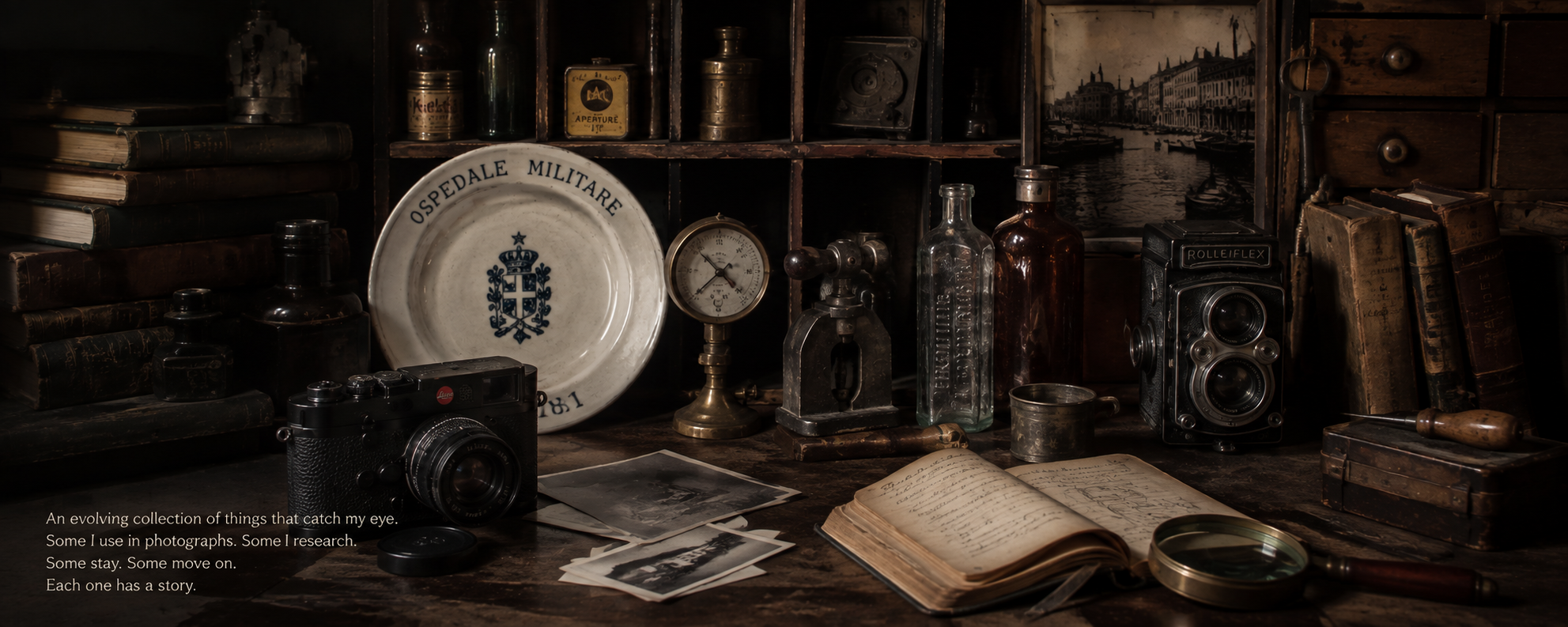
That is why it belongs in The Cabinet.
Not because it is rare or enormously valuable.
Because the workshop has disappeared, while the object and the photographs remain.
And somehow, after all these years, one of the figures I once photographed in the strange, crowded world of Miotto has found its way home with me.
THE OBJECT
Object: Venetian Moretto three-light electric candelabrum
Maker: Gianfranco Miotto workshop
Origin: Venice, Italy
Workshop: Salizada Zorzi, Castello
Probable date: Second half of the 20th century
Material: Painted and gilded composition/wood with metal candelabrum and electrical fittings
Tradition: Venetian decorative arts
Provenance: Acquired directly from a member of the Miotto family, 2026
Related archive: Photographs by Marco Secchi documenting the Miotto workshop while it was still operating
STATUS: COLLECTION
This object is currently not for sale.